Asset recovery

Boat Repossession in Cleveland and Northeast Ohio

Marine collateral can involve a vessel, motor, trailer, marina, storage facility, and multiple identifiers on the same assignment.

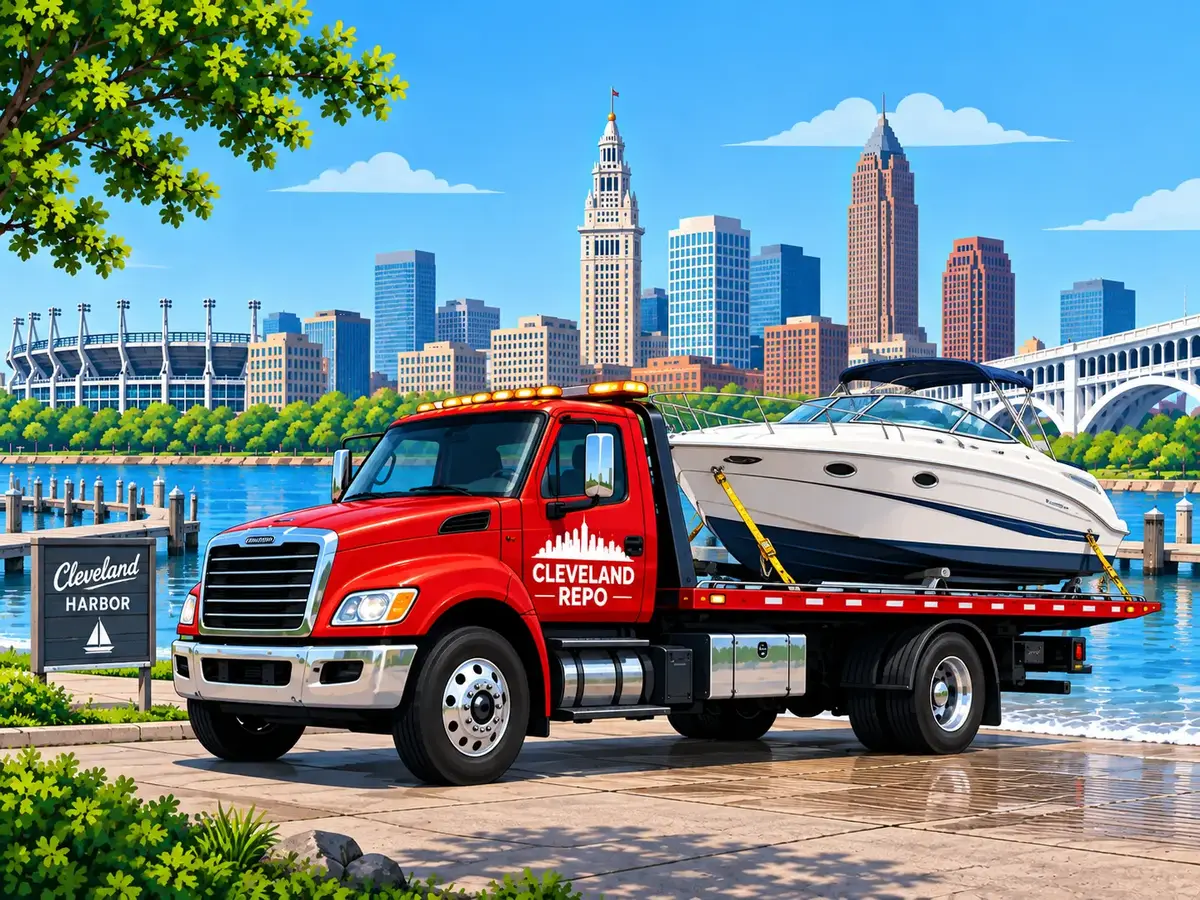
Rollback tow truck transporting a recovered boat in Cleveland

Assignment planning

A boat file may contain several connected assets

Boats and personal watercraft may be stored on a trailer, in a marina slip, at a dry-stack facility, inside seasonal storage, or on private property. The location determines whether the first task is access coordination, vessel identification, trailer verification, or transport planning.

A complete file should separate the hull identification number from the trailer VIN and record the motor serial number when it is part of the collateral. Length, beam, estimated weight, trailer condition, keys, covers, and current location all help define what the assignment requires.
Assignment questions

What lenders often need to clarify

Which identification numbers belong in a boat assignment?

Include the hull identification number, state registration, motor serial number when applicable, and the trailer VIN and plate. The lender should also state which of those assets are included in the account.

What if the boat is still in the water?

Provide the marina, slip, launch, or waterfront location along with vessel dimensions and contact information. A boat in water requires a different access and movement review than a vessel already sitting on a road-ready trailer.

Asset-specific factors

What affects the recovery plan

Multiple identifiers

The hull, motor, and trailer may each have separate numbers and may not all be included in the lender's assignment.

Water or land location

A vessel in a slip presents different access and movement questions than one already secured to a road-ready trailer.

Seasonal storage

Marina procedures, storage agreements, shrink wrap, winterization, and access schedules may affect inspection or movement.

Process

How the assignment moves forward

Confirm what is included

Identify the vessel, motor, trailer, and any additional collateral covered by the assignment.

Verify the current setting

Determine whether the boat is in water, on a trailer, in dry storage, or located on private property.

Review movement requirements

Use the vessel dimensions, trailer condition, access details, and available keys to determine the next step.

Document each asset

Record available photos, identifiers, condition notes, accessories, location details, and transport status.